
Term 01 at Masters’ Union: My Honest Experience, Beyond the Brochure
If you’re considering Masters’ Union, chances are you’ve already seen the placement numbers, the industry leaders, the live projects, the startup stories, and the promise of a very different business-school experience.
I had many of the same questions before joining.
Now that I’ve completed my first term, I thought I’d share my experience as honestly as I can. Not as a promotion, and definitely not as a verdict, but as one student’s perspective after actually being here.
Placements and career outcomes
If your only objective is placements, I would encourage you to compare Masters’ Union with established Tier-1 B-schools such as IIMs, XLRI, SPJIMR, MDI and others, based on the specific career outcome you want.
At MU, the placement opportunities are certainly there, but I wouldn’t join expecting a particular package simply because you saw the highest number in a placement report.

My advice would be to look at the distribution rather than the headline figure. If you want to estimate a realistic outcome, remove the highest and lowest numbers and think about where the middle of the distribution sits.
Also, cohort size is something worth keeping in mind. The overall full-time cohort has grown significantly, and with the institution expanding into more programs, this is something prospective students should evaluate carefully when looking at future placement outcomes.
How do recruiters perceive Masters’ Union?
My experience so far has been positive.
One thing that stands out is the amount of interaction students get with people from industry. You regularly get exposure to founders, senior executives, operators and professionals across different sectors.
That exposure can be valuable, but I think the bigger question is what you do with it.
A strong network does not automatically create a strong career. You still have to build relationships, demonstrate your ability, work on meaningful projects and make the most of the opportunities around you.
What about the degree?
This is an area where I would strongly recommend prospective students understand the exact qualification attached to the specific program they are applying for.
The programs and their structures are not identical, and the degree/qualification you receive depends on the program and applicable requirements. So rather than relying on what someone says on LinkedIn or Reddit, ask the admissions team for the exact details relevant to your program and cohort.
Corporate exposure and industry connections
This is probably one of the parts of MU that I’ve enjoyed the most.
The exposure is much more integrated into the learning experience than what I personally expected. Instead of only learning concepts from textbooks, you frequently get opportunities to interact with people who are actually building companies, running businesses or working in the industries we discuss in class.
For someone who wants to understand how businesses actually operate, this has been genuinely useful.
But again, exposure is an opportunity, not an outcome.
You have to raise your hand, ask questions, build relationships and participate.
What about internships and live opportunities?
There are plenty of opportunities to work on live projects, internships and other forms of industry exposure.
The important thing is that you shouldn’t expect opportunities to simply land in your lap.
The students who actively look for them, reach out, build relationships and keep putting themselves out there are likely to extract much more value from the ecosystem.
Scholarships and cohort diversity
Scholarships can vary depending on the program and individual profile, so I would recommend checking the current admissions terms rather than relying on older numbers.
What I can say from my experience is that the cohort itself is one of the interesting parts of MU.
You meet people from different academic backgrounds, industries, cities and career stages. That diversity changes classroom conversations because you’re not just learning from faculty or industry guests. You’re constantly learning from the people sitting next to you.
What about campus life?
This is probably where MU differs most from a traditional university.
If you are looking for the classic college experience with a huge established campus, multiple buildings, sports infrastructure and years of campus culture, this is not the same experience.

MU is building its university ecosystem, so the physical campus experience is still evolving.
That said, the people, classes, events, projects and interactions create their own kind of campus experience.
For me, the value has been much more about the people and opportunities than the traditional idea of a college campus.
Has MU lived up to my expectations?
Honestly, yes, but not in the way I initially expected.
Before joining, I was thinking quite a lot about placements and whether I would eventually get a good job.
I still care about that.
But after spending a term here, I’ve started thinking more seriously about what I actually want to build.
I’ve always had the entrepreneurial side in me. I had even tried building a restaurant business before, and it didn’t work out because of several challenges.
My original thought was simple:
Get a good job first, then build again.
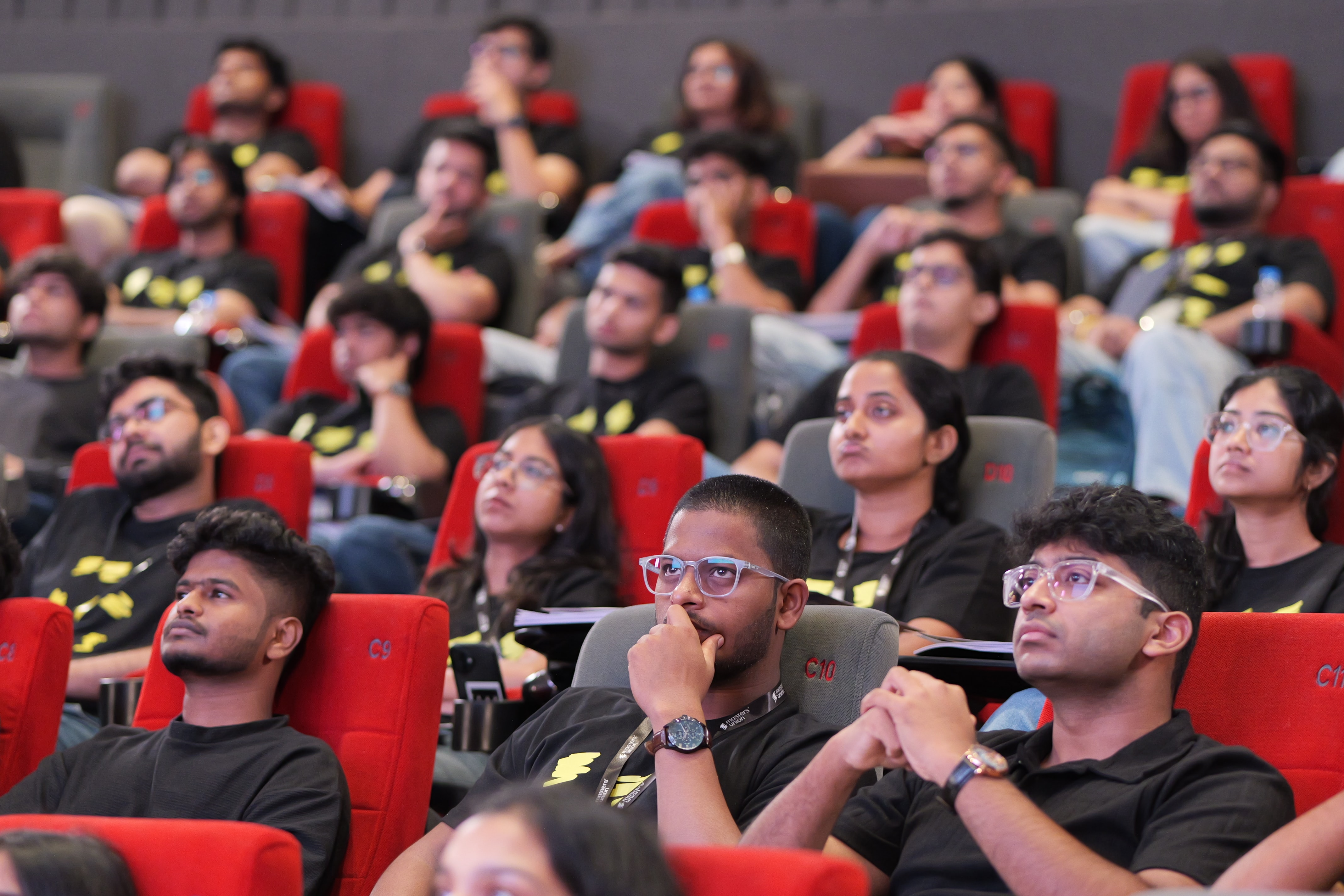
But being around founders, operators, ambitious peers and a network of people who are constantly building has made me question whether I should always think of entrepreneurship as something I need to postpone.
I’m still keeping placements as a safety net.
But now, I’m much more open to building something of my own when the right opportunity comes along.
And that, for me, has been one of the biggest changes after joining MU.
So, should you join?
I don’t think there is a universal answer.
If you want a conventional B-school experience focused primarily on established recruiting pipelines, you should compare MU carefully with the traditional schools you are considering.
But if you want an environment built around entrepreneurship, technology, industry exposure, live projects, ambitious peers and experimentation, then MU is worth seriously exploring.
And if you do join, my biggest advice would be:
Don’t come here just to attend classes and chase placements.
Build something.
Talk to people.
Take up live projects.
Ask uncomfortable questions.
Use the network.
Try things that might fail.
Because the biggest value I’ve found here isn't a particular number on a placement report.
It’s the number of possibilities you start seeing for yourself.
Term 01 flew by.
And I’m genuinely looking forward to seeing what the next ones bring.
Responses (0)
No responses yet. Be the first to share your thoughts!